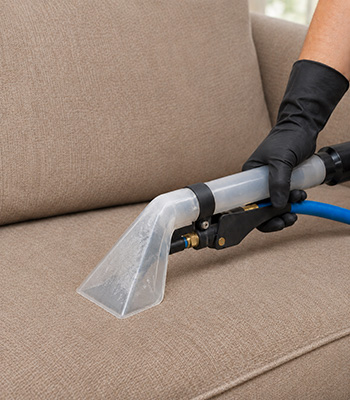
At first glance, the math seems simple. A rental upholstery cleaning machine usually costs less than a professional appointment, and a portable machine can be purchased for roughly the price of one professional cleaning.
The choice depends on how often you clean, how much furniture you have, what the upholstery is made from, and how much work you are willing to do yourself. We also see another cost that homeowners sometimes overlook: what happens when an inexpensive DIY cleaning attempt leaves residue, uses too much moisture, or simply is not suitable for the fabric.
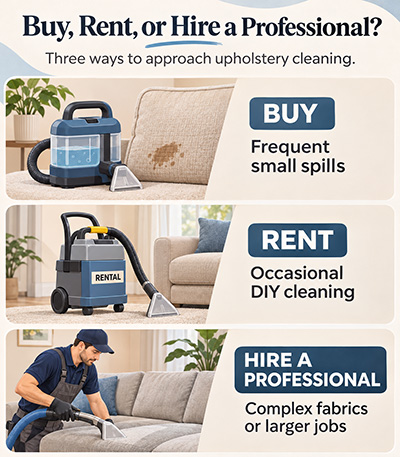
For homeowners comparing upholstery cleaner rental vs buying, our general recommendation is straightforward: buy for frequent small cleanups, rent for occasional DIY projects on compatible upholstery, and consider a professional when the furniture, soil level, or amount of work makes mistakes more expensive than the potential savings.
There is no single upholstery cleaning cost that applies to every sofa.
Baltimore-area pricing examples ranged from about $80 for loveseat cleaning to roughly $180-$220 for some couch-cleaning services. Broader consumer cost data can be higher because those figures may represent an average project rather than one standard sofa.
That distinction matters. When our technicians discuss sofa cleaning cost in Baltimore, we look at the furniture being cleaned rather than treating every couch as the same job.
Price can change with:
We often see two sofas that look similar in a photo but present very different cleaning conditions once they are examined up close.
A rental can be the lowest-cost option for a straightforward one-time project, but we recommend comparing the complete cleaning expense rather than the advertised machine rate.
Here is what a typical rental expense might look like:
| Rental Expense | Example Cost | What It Covers |
|---|---|---|
| 24-hour machine rental | $39.99 | Base machine |
| Upholstery attachment | $5.99 | Furniture-cleaning tool |
| Cleaning solution | $17.99 | 48 oz solution |
| Estimated project total | $63.97 | Before taxes and possible additional fees |
That $63.97 is much more useful for comparison than looking only at a $39.99 rental advertisement.
There can also be other considerations: transportation, deposits, late fees, cleaning fees, additional solution, and the time involved in collecting and returning the machine.
For some households, absolutely. One standard portable upholstery cleaner is priced at $129.99, with other portable models ranging from roughly $80 to $250 depending on the version.
Compared with the $63.97 rental example, a $129.99 portable upholstery cleaner costs roughly as much as two rental sessions before we account for future cleaning solution and maintenance.
That makes ownership particularly attractive when spills are frequent. Our team sees the strongest case for buying in homes with:
A small spot cleaner is convenient for localized problems. Cleaning an entire large sectional is another project altogether. Tank refills, extraction, repeated passes, cleanup, and drying considerations become much more noticeable once you move beyond a cushion or small area.
When our technicians compare the three options, we look beyond the initial payment.
| Option | Usually Makes Sense When | Cost You Can Easily Miss |
|---|---|---|
| Buy | You expect frequent spills and repeated small cleanups | Solution, maintenance, storage, your time |
| Rent | You have an occasional compatible DIY project | Attachment, solution, transportation, pickup/return, labor |
| Hire a professional | You have multiple pieces, heavier soil, difficult fabric, or want to avoid DIY risk | Higher upfront service price |
Buying usually wins on repeated-use economics. Renting can win for one occasional cleaning.
Professional service tends to become more competitive when the project is larger or when the value is not simply access to a machine but knowing how the furniture should be cleaned.
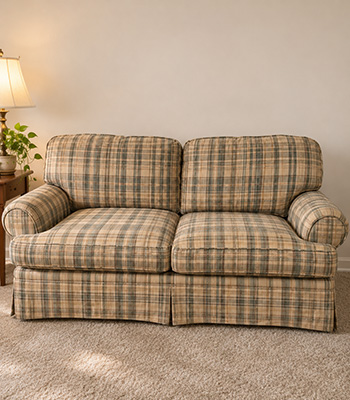
A Baltimore homeowner who had found a secondhand couch at a great price contacted our team for advice. He didn't feel comfortable sitting on it without getting it cleaned. He had initially planned to rent an upholstery cleaner and handle the cleaning himself. Before renting the equipment, he checked the furniture care label and noticed it specified water-free solvent cleaning.
Our technician inspected the label and confirmed that a standard water-based rental extraction method was not suitable for this couch. We recommended against using that approach because it could damage the upholstery.
The quote for professional cleaning was slightly more than he had paid for the sofa. Although that was a significant expense compared with the furniture's purchase price, choosing the wrong cleaning method could have caused even greater problems.
This case illustrates an important point: the price you paid for furniture does not determine how it should be cleaned. A $50 secondhand couch and a $2,000 sofa can present the same cleaning challenge if their fabrics cannot tolerate the planned method.
Before buying or renting an upholstery cleaner, look for the furniture manufacturer's care information.
Common upholstery codes include:
The code is a starting point that can tell you when a planned DIY approach is clearly a poor match. Our technicians are particularly cautious when furniture has older fabric, weakened stitching, loose piping, specialty finishes, or different materials on replacement cushions.
The most common DIY mistake we encounter is not necessarily dramatic damage. Sometimes it is simply a disappointing result that creates more work later.
We encounter furniture where previous DIY products have left residue behind. That residue can contribute to rapid resoiling and leave homeowners wondering why the cleaned area seems dirty again so quickly.
Successful extraction is not just about putting cleaning solution into the fabric. Moisture also has to be removed effectively. Over-wetting upholstery can lengthen drying time and contribute to odors or other unwanted results.
A dark mark is not always removable soil. Sometimes the fabric has experienced discoloration, dye transfer, wear, or permanent fiber change. More aggressive cleaning will not necessarily restore the original appearance.
Armrests and headrests often hold much more body oil and soil than the center of the furniture. We often find that different areas of the same sofa have very different soil loads. That is one reason whole-sofa cleaning can become more complicated than the machine demonstration makes it look.
We tend to recommend professional upholstery cleaning in Baltimore when the professional service solves problems that a homeowner would otherwise need to manage alone.
That can include:
Hot water extraction is one of the primary methods our team uses for appropriate upholstery, while other furniture may call for a different approach. Our experience is that method selection matters more than having one machine and trying to make every sofa fit it.
The professional upholstery cleaning cost is therefore paying for more than machine access. It includes the labor and judgment involved in approaching the furniture as furniture, not simply as another surface that can be sprayed and extracted.
We recommend making the decision based on how the furniture will actually be used and cleaned. Our team does not believe professional service is automatically the cheapest answer for every household. Sometimes renting really is the smart financial choice. Sometimes buying is.
But when a low DIY price depends on using the wrong method, spending half a day on a large sectional, or repeating an unsuccessful cleaning attempt, the apparent savings can disappear quickly.
If you are unsure what makes sense for your furniture, UCM Upholstery Cleaning can help you compare the options before you commit to a cleaning approach. Call 443-842-6344 to discuss your upholstery and schedule service in Baltimore.
Check the manufacturer's information when possible, and if the cleaning method is still unclear, our technicians recommend getting professional guidance before applying moisture or cleaning products to the upholstery.
The cushion material and care instructions still matter. Our team also considers whether cleaning one noticeably soiled cushion could leave it looking different from the rest of the sofa.
Yes, some portable upholstery cleaners can be used on car seats, floor mats, and other vehicle fabrics.
Yes. Vacuuming first removes loose dust, crumbs, pet hair, and other dry debris. If these particles remain on the upholstery, they can mix with the cleaning solution and make the cleaning process less effective.


